Le Défi
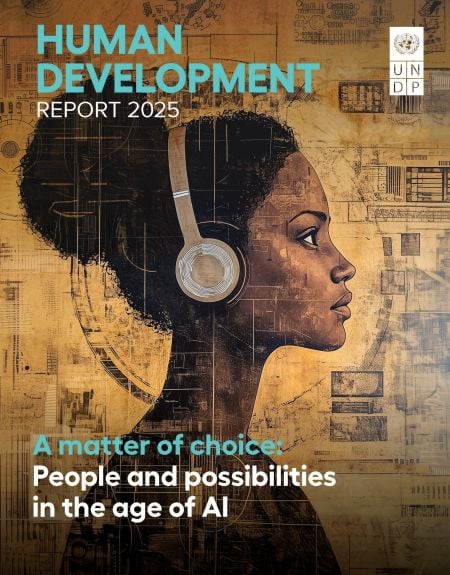
The Human Development Report 2009 of the United Nations Development
Programme (UNDP) was launched by the Mauritius UNDP and the Ministry of
Labour, Industrial Relations and Employment, at Le Labourdonnais Hotel,
recently. The theme this year was Overcoming Barriers: Human Mobility
and Development.
Year by year, millions of people cross national
or international borders in their quest for better living standards.
Most migrants, whether internal or international, benefit from
migration in many forms: chances to higher incomes, better access to
education and health facilities, and improved prospects for their
children.
Mobility, together with human development has become
the order of the day. We live in a world which is very much mobile, and
consequently, immigration is unavoidable. Mobility, in fact,
constitutes a very important dimension in the human development which
is about putting people at the centre of their development. Thus, it
encompasses not just the income that the employment generates, but also
the person's well-being.
In his speech, at the launching
ceremony, Jean François Chaumière, Minister of Labour, Industrial
Relations and Employment, quoted Prof. Amartya Sen, Nobel Laureate for
Economics, who said : “Human development, as an approach, is concerned
with what I take to be the basic development idea: namely, advancing
the richness of human life, rather than the richness of the economy in
which human beings live.”
Human mobility is, as a matter of
fact, on the rise, worldwide. Though migration is an age-old
phenomenon, its present scale and particular characteristics make of it
an issue of rising global concern.
Worldwide, more than 214
million people are now living outside their country of origin.
Mauritius itself has an emigration rate of 12.5%, with 49.7% of the
emigrants living in Europe. And in Mauritius, there are 40.8 thousand
migrants, which represent 3.3% of the total population.
Economic
opportunity, political turmoil, family reunification, war and
environmental crisis are some of the core reasons which push people to
migrate. Labour mobility has most certainly undergone a major change in
recent years.
It is undenuable that the flow of migrants has
profound economic security, social, and cultural effects on the
countries of origin, and destination. The tables have now turned. Human
mobility, formerly considered as an upcoming problem has turned into a
process that needs be managed. After all, migration gives a boost to
the country, through national economic growth and individual choices of
expansion. Thus, circular migration is an area which demands attention.
Speaking at the launch of the report, Minister Jean-Francois Chaumière explained that “Human Development Reports serve as benchmarks and as reference for
measuring human progress, triggering action for change and addressing
specific human development approaches to human rights, poverty,
education, economic reform, HIV/AIDS and globalisation.”
According
to him, the theme of this report is very appropriate to the present
context. “It has indeed come at an opportune time when human mobility
has become one of the most complex issues facing the world today,” he
said.
Human development and mobility can best be explored
through the implementation of better policies. The 2009 Human
Development Report lays out six pillars of reform which would expand
human choices and freedoms. The report also argues for practical
measures that can benefit both the destination communities and the
places of origin.
The six pillars are the liberalisation and the
simplification of the legal frameworks which enable less qualified
people to look for jobs in the foreign job market; guarantee of the
fundamental rights of the immigrants; reduction of the transaction
costs linked to migration; improvement on the impact for the immigrants
and the host communities; exploiting the benefits of internal mobility;
and integrating mobility to the national development strategies. Each
of these six pillars has its own advantages, but a combination of the
six would bring better opportunities and would benefit human
development and mobility.
Mauritius is mentioned in the
report as a small state which made migration a strategic element of
development efforts. The report says that there are about 36,000
expatriates living and working in the Mauritian territory, particularly
in the construction and manufacturing sectors. It is estimated that
expatriates would continue to play a crucial role in the economic
development of our island.
On the other hand, as the HRD reports
confirm Mauritius has actively encouraged temporary employment abroad,
as a way of acquiring skills and capital that migrants can use to set
up their own business in return. Supported by donors, government has
established a programme that provides technical and financial support
to returning migrants.
Another concern which retained the
attention of the UNDP is the rights of migrants. The HDR 2009
highlights the Multilateral Framework on Labour Migration, developed by
the ILO.
The report also lays emphasis on the role of
stakeholders - ranging from government and consular services, to
employers, trade unions and NGOs - in ensuring that basic rights of
migrants be respected.
At the local level, the government is
finalising the Occupational Safety & Health (Employees Lodging
Accommodation) Regulations to provide better accommodation to migrant
workers.
In addition to these, the Ministry of Labour is
presently finalising the Decent Work Country Programme Document, which
is expected to impact positively on the quality of life of all workers,
including migrant workers.
Return to the list <<<<<