
Cantonal Human Development Atlas 2024
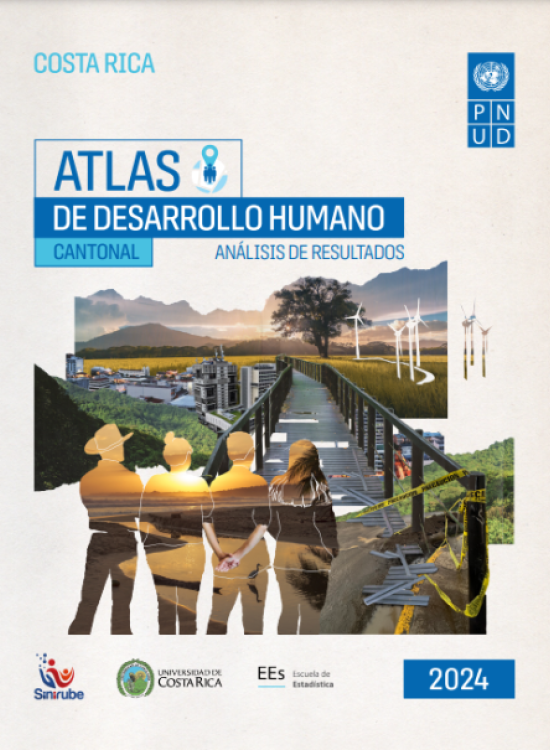
UNDP (United Nations Development Programme). 2024. Cantonal Human Development Atlas 2024. New York.
Cantonal Human Development Atlas 2024
The Costa Rica Cantonal Human Development Atlas 2024, produced by UNDP Costa Rica in partnership with the University of Costa Rica and SINIRUBE, provides a territorial analysis of human development across the country’s cantons. Based on data up to 2022–2023, the Atlas measures progress through five key indicators: the Human Development Index (HDI), Inequality-adjusted HDI, Gender Development Index, Gender Inequality Index, and Multidimensional Poverty Index (MPI).
The report finds that human development has generally improved nationwide, recovering from the setbacks caused by the COVID-19 pandemic. Although cantons within the Greater Metropolitan Area continue to show the highest development levels, cantons outside the metropolitan area have experienced faster growth, helping to narrow territorial gaps. Border regions and coastal areas remain among the most disadvantaged.
The Atlas highlights the significant impact of inequality. When development outcomes are adjusted for inequality, many cantons experience substantial declines in their rankings, demonstrating that economic and social disparities continue to limit development opportunities. Gender gaps also persist, particularly in material well-being and labor participation, although gradual improvements have been observed in several areas.
Multidimensional poverty continues to decline nationally, yet important territorial disparities remain. Higher poverty levels are concentrated in northern and southern border cantons, while the lowest levels are found in central urban cantons. Approximately one in ten residents lives in cantons with high or very high multidimensional poverty.
Beyond its core indicators, the report examines the links between human development, citizen insecurity, violence against women, disaster impacts, and environmental conditions. The findings show that lower human development, greater inequality, and higher poverty are associated with increased exposure to violence and vulnerability to disasters. The Atlas also emphasizes the importance of strengthening resilience, investing in gender equality, improving local opportunities, and supporting evidence-based territorial planning.
As a strategic tool for policymakers, local governments, and development partners, the Atlas provides critical evidence to support targeted public policies and accelerate progress toward the Sustainable Development Goals at the local level.