
Towards Peace with Nature: A Preview of the 2026 Human Development Report
What if the future of human development depends not only on managing overlapping crises, but on repairing our relationships—with each other and with the planet?
UNDP’s forthcoming 2026 Human Development Report, Towards Peace with Nature: Nurturing the Foundations of Human Development, explores how societies can build more constructive relationships among people, between societies, and between people and nature.
Around the world, planetary change, conflict, polarization, and growing uncertainty are increasingly shaping people’s daily lives. The 2026 Human Development Report asks whether these challenges are connected by a deeper pattern: fractured relationships — among people, across societies, and with the natural systems on which human development depends.
Rather than focusing only on crisis, the report advances an aspirational approach to planetary futures. It explores how stronger relationships can become a foundation for hope, resilience, and thriving futures for both people and planet. The challenge is not only to reduce human pressure on nature, but also to rethink how people, communities, institutions, and economies relate to one another and to the natural world.
Early insights:
- Planetary challenges are human development challenges.
- Climate change, biodiversity loss, and environmental degradation affect people’s health, livelihoods, and security.
- Relationships matter for development.
- Development depends not only on physical, human, and natural capital, but also on the quality of relationships: among people, between societies, and between people and nature. Rebuilding trust, cooperation, solidarity, and reciprocity is central to advancing human development in a changing world.
- A different relationship with nature is possible.
- Across history and around the world, communities have protected, restored, and lived alongside nature in ways that enrich both human lives and the planet.
What’s new in the 2026 HDR?
The 2026 Human Development Report will introduce new approaches to human development measurement that aim to better capture how societies relate to nature and how environmental risks intersect with human development.
The Nature Relationships Index
The Nature Relationships Index measures the extent to which societies are creating the conditions for people to develop and sustain relationships with nature that support both human wellbeing and planetary health.
The Multi-Hazards Environmental Index (MHEI)
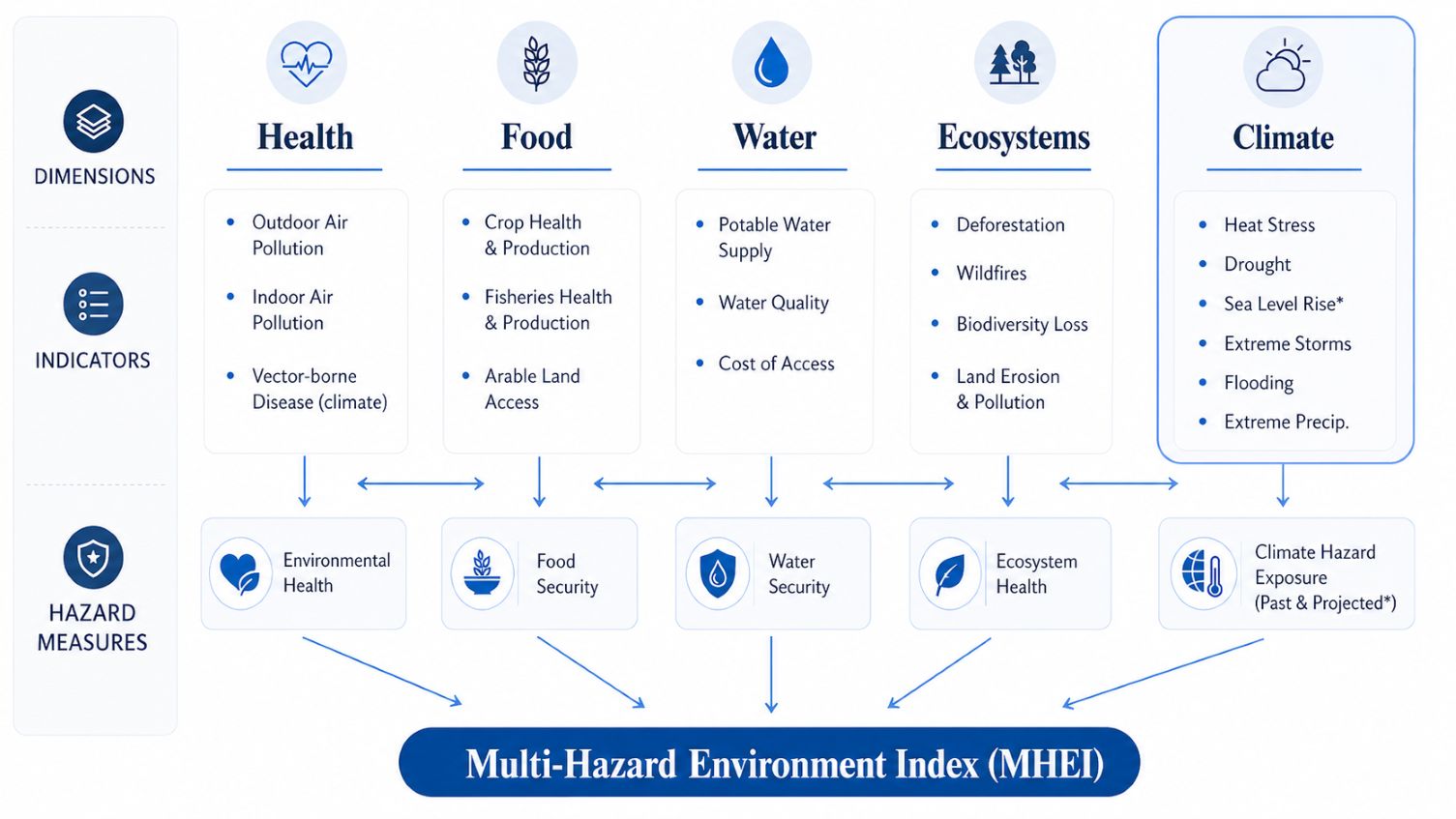
The MHEI is a subnational tool that identifies hotspots where environmental hazards — such as heat, flooding, and drought — intersect with human development deficits. It is designed to help policymakers move from reactive disaster response toward more proactive adaptation planning by showing where targeted investments and community-level action are most needed.
How do climate risks and human development deficits intersect?
The climate hazards index builds on six indicators of exposure to hazards:
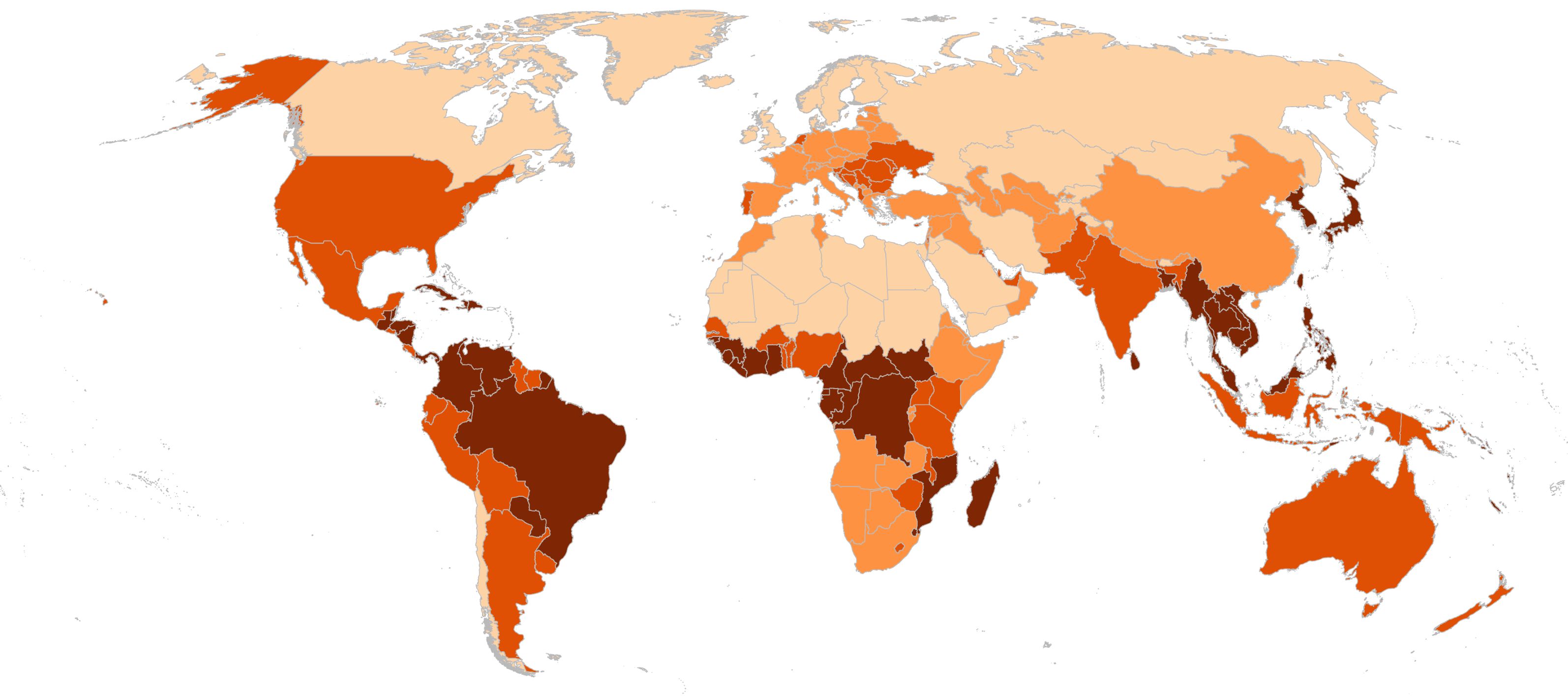
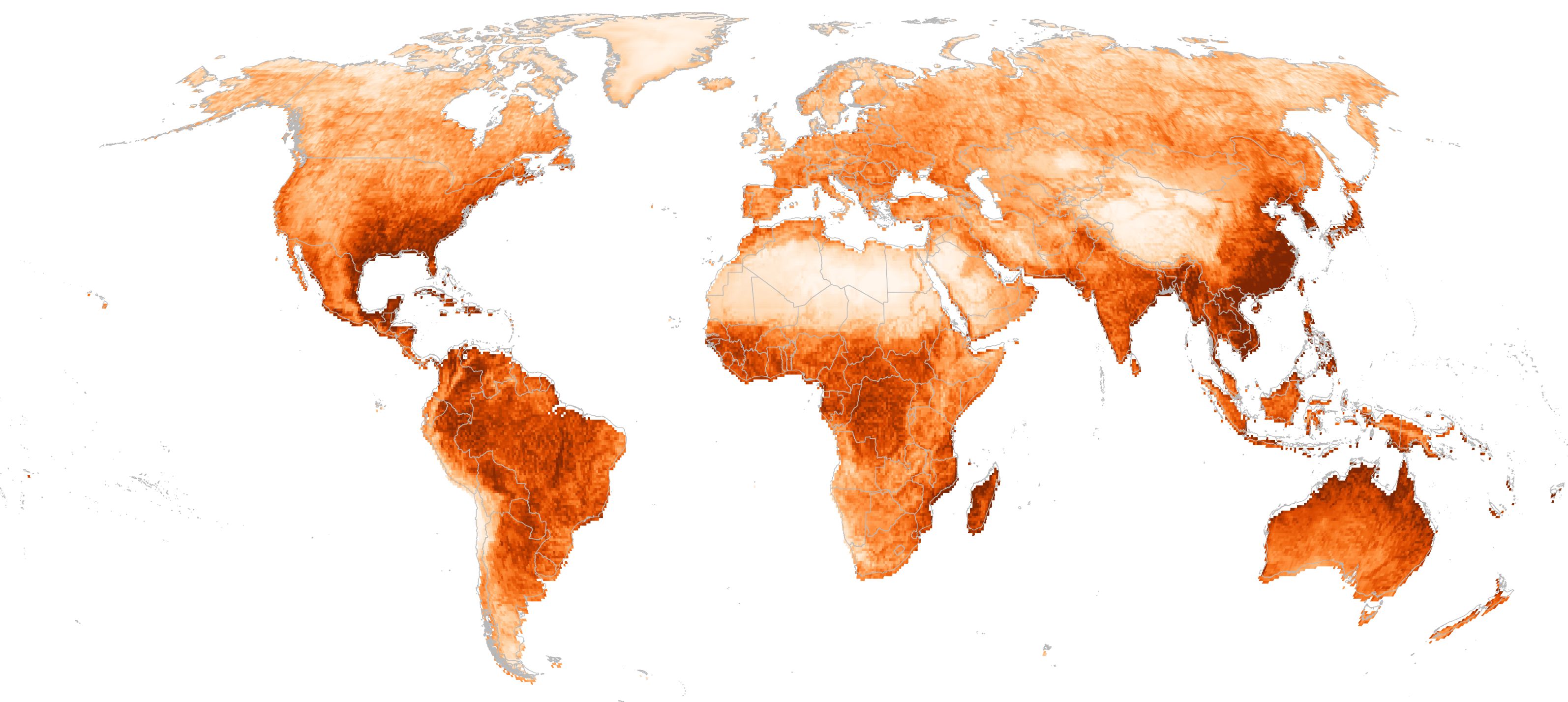
We use this to construct and index that allows us to zoom in from the global to the hyperlocal:
Global:
Hyperlocal:
Why this matters?
Human development is not at odds with sustainability; it is indispensable to building a hopeful, resilient, and just future. At its core, human development is about expanding people’s freedoms and capabilities to shape futures different from the ones they inherit.
The 2026 Human Development Report argues that reimagining how people relate to one another, to their communities, and to the natural world is central to advancing human development in a changing world. It will introduce novel tools to help policymakers better understand where risks are concentrated, where action is most needed, and whether societies are moving toward more constructive relationships with nature.
The Multi-Hazards Environmental Index will help identify where people are exposed to environmental hazards, how vulnerable they are, and where financing and adaptation policies may be most needed.
The Nature Relationships Index will offer a new way to assess whether societies are creating the conditions for people and nature to thrive together. It can provide an evidence-based reference point for countries navigating complex transitions and making decisions about more sustainable and resilient futures.